
Fields on a Lafayette County Owner Record
The grid labels the core fields. Ascent's public result shows Owner(s), Parcel, Site Address, Privacy Exp. Date, and Tax Years. Other Lafayette County material can add a mailing address, legal description, assessment, tax, sales history, and zoning. Those details appear where they exist. Read together, these fields pin down which parcel is under review. They also show where a current name appears in the assessment system.
| Owner(s) | Name shown on the tax parcel record |
|---|---|
| Parcel | County key used to match the map and tax record |
| Mailing address | Address maintained for tax correspondence |
| Site Address | Physical location associated with the parcel |
| Legal description | Land text used to compare with a deed |
| Latest deed | Grantee and recording date in the Register of Deeds index |
The tax owner is not always the occupant. A mailing address proves where bills go, not where the named owner lives. Use the name to find the matching deed. Never use it to infer a person's private activity. Ascent is an administrative record, the Register of Deeds holds the recorded instrument, and the Ascent parcel detail route shows the current result fields.
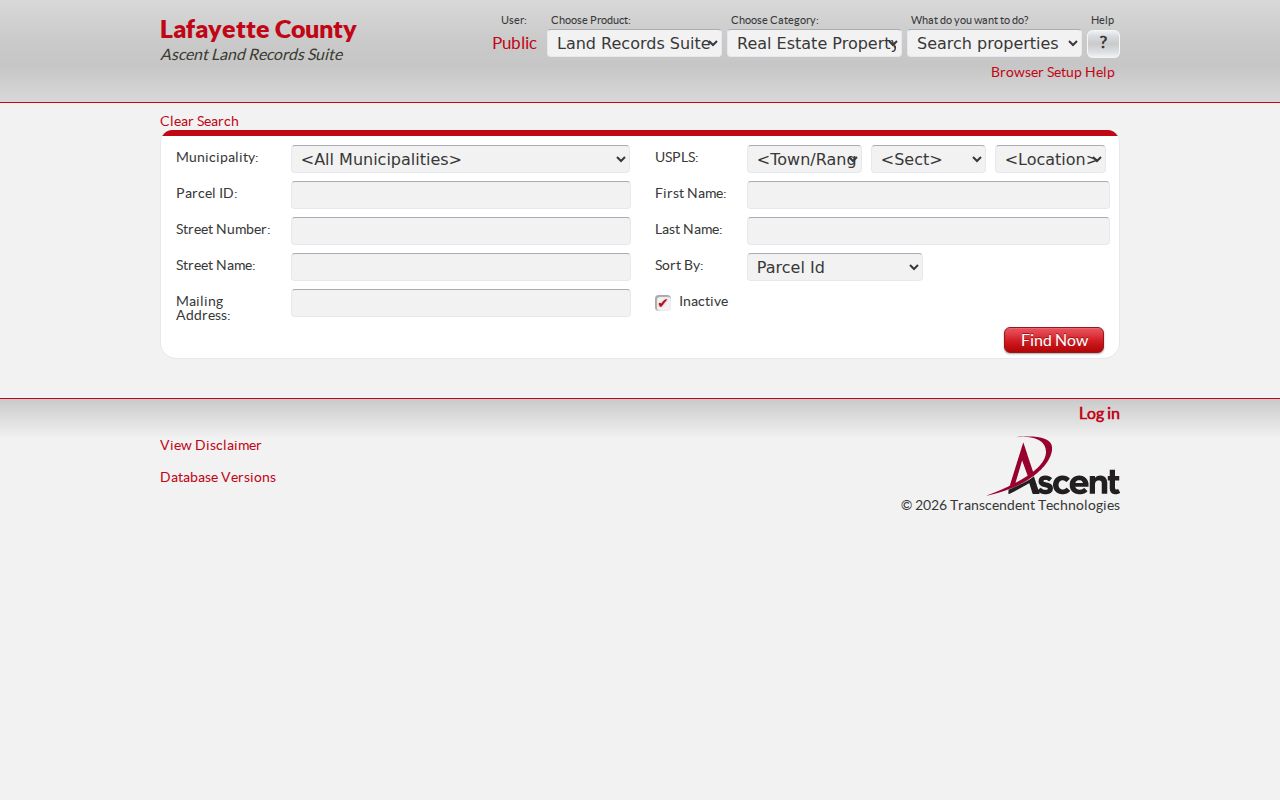
Copy the parcel number and the legal description first, so any deed confirmation refers to the same piece of Lafayette County land.
How Current Is a Lafayette County Owner Name?
Lafayette County publishes no fixed lag between a closing and an Owner(s) update. No standard window exists. The Real Property Lister maintains ownership information. GIS materials describe parcel geometry as continuously updated after transfers. So the mapped shape and the tax owner field can tell different parts of the story. A recent sale calls for a different move. Search the Register of Deeds for the newest grantee and match the legal description. If Ascent still shows the previous name, check the instrument date. Then contact the custodian instead of guessing at a standard update lag. The county address-change form is blunt on one point. A mailing-address request cannot change ownership on a tax bill. A recorded document controls that change.
Mailing and Situs Data for Lafayette County Owners
The Real Property Lister maintains the mailing address, property address, parcel number, legal description, school and special-district codes, maps, and assessment-roll support for Lafayette County. Site Address is the situs, the physical location. Mailing address is where county tax correspondence goes. The two can differ when an owner uses another home or business address. Rural parcels bring a wrinkle. A rural lot may be known by a fire number and road name. If a street search fails, try the parcel key or the rural address form. The tax mailing line exists for record and bill delivery, so do not treat it as a personal contact instruction, and remember that privacy limits can apply.
Confirming a Lafayette County Current Owner
A current-owner check pairs the tax record with the latest deed. Ascent identifies the parcel and tax-roll name. Tapestry EON identifies recorded parties and the legal description. Keep the two aligned by parcel and land text, especially for a rural Lafayette County lot or an address that has changed.
- Find the parcel in Ascent and copy its Owner(s), Parcel, Site Address, and legal description.
- Search Tapestry EON for the latest incoming deed by grantee or land description.
- Compare the grantee and described land with the tax parcel.
- Ask the Register of Deeds or Lister about a mismatch or a recent transfer.
- Owner of record
- The name shown in an office’s ownership record.
- Vesting
- The way a deed describes the interest or title holder.
- Registered agent
- A contact for an entity’s filings, not necessarily its owner.
- Recording lag
- The interval before an administrative roll reflects a filed transfer.
LLCs, Trusts, and Estates on Lafayette County Records
Deeds do not always name people. A Lafayette County deed can vest title in a business, a trust, or an estate. Estate transfers may use personal-representative wording, and probate records can document authority for a later deed. Search the exact name as filed. A registered agent is the entity's public filing contact, not proof that the person owns the parcel. Wisconsin DFI's public search can help. It can show a legal name, status, type, registered agent and office, and filing history, but no FEINs, domestic LLC member names, sole proprietors, or DBAs. Use it to confirm the entity label only. Then confirm the transfer with the Register of Deeds. See the Wisconsin DFI advanced entity search for the filing fields that are public.
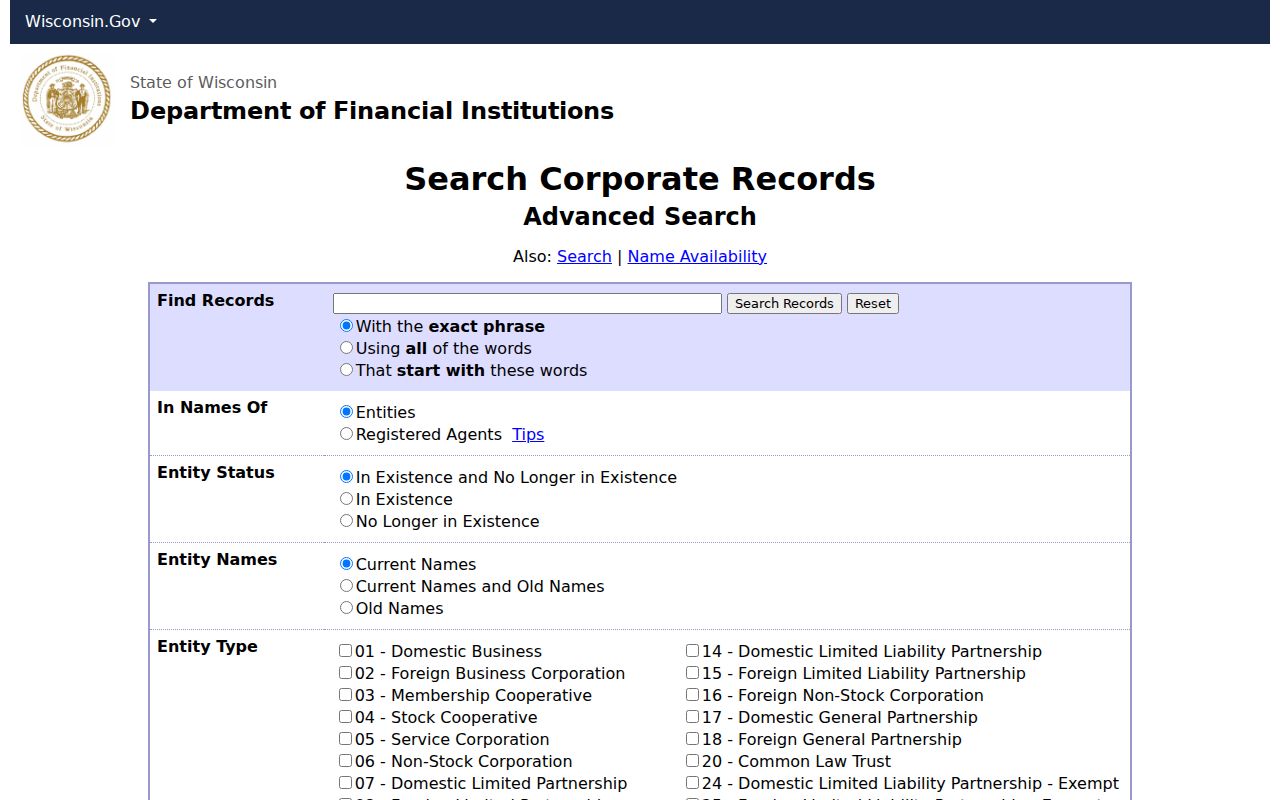
DFI clarifies the name; the deed proves the conveyance.
Current Lafayette County Owner and Tax Parcel Fields
The word "current" needs a date and a source. Ascent gives the name on the Lafayette County tax parcel record with tax-year context. Tapestry gives the parties on instruments recorded by the Register of Deeds. Those systems answer related but different questions. The county publishes no fixed delay between a deed filing and a changed Owner(s) value. Note the record date and tax year beside every name you save, because a name without context ages fast. Ascent also displays a Privacy Exp. Date field. Treat it as a grid label. It does not mean every public copy of an address vanishes on that date. A tax card is a government record with its own access rules. If an address is protected or a record looks incomplete, ask the custodian what the field means for that parcel. Never infer status from a blank or older value. The real-property lister maintains a wide set of data. The list runs from parcel identifiers and owner data to mailing addresses, site addresses, legal descriptions, school and special-district codes, mapping, and assessment-roll support. That range makes an owner card useful. It does not make the tax card an official title opinion. The latest recorded deed is the document to inspect.
Recorded Deeds Confirm Current Lafayette County Ownership
A fresh closing calls for a simple two-step check. Run the buyer's exact name as grantee in Tapestry EON. Then compare the land described there against Ascent. The deed index reaches back to 1847, covering deeds, bonds, and contracts. Mortgage images are online from 1961, with older mortgage records held at the office. A mortgage or satisfaction can explain an encumbrance. It still cannot replace the deed that actually transfers title.
Tapestry pricing is straightforward. A search costs $8.75 and returns at most 200 listings. The detailed index opens after the query runs, and images cost $1 per page. Common names need narrowing by date, document type, or legal description. Then read the recording reference and the complete image. When the latest deed has not yet reached the tax roll, ask the Register of Deeds or Real Property Lister. Ask which record date each system shows. The county publishes no standard update lag between them.
What a Lafayette County Owner Entry Cannot Confirm
The Owner(s) field exists to support a parcel's assessment and tax record. That is its whole job. It is not a live directory of residents. It does not guarantee a person's address or say who manages an entity. A mailing address shows only where tax correspondence goes. Treat it as a delivery point rather than proof of where a named person lives.
Corporate and trust owners need a different trail. The state business filing can clarify the exact entity name. It also covers the registered agent, status, and filing history. Wisconsin DFI does not disclose all internal ownership details, though, such as domestic LLC members. A search result may not answer who controls the entity. For an estate, the probate file plus the recorded deed may be needed. Together they explain the authority for a transfer. The land instrument remains the key source for the parcel's recorded owner.
Recent purchases deserve careful notes. Preserve the Ascent tax year, the deed recording date, and the legal description. Those details let the Register of Deeds or Real Property Lister explain any mismatch. That way an older tax card is not mistaken for proof that the latest deed was never filed. Ask the office for its current procedure. Do so whenever a privacy-protected address or confidential participant is involved.
Responsible Use of Lafayette County Owner Records
Public records serve real purposes. Ownership research, buying or selling diligence, tax review, and house history all draw on them. They do not reveal every private relationship behind a property. Wisconsin's Safe at Home program gives eligible participants a substitute address along with confidential-elector protections. The Department of Justice cautions that home ownership can raise special planning issues for participants. Ask the program directly how a property address is treated. The full details are in the Wisconsin Safe at Home guidance. It explains eligibility and the address-protection process.
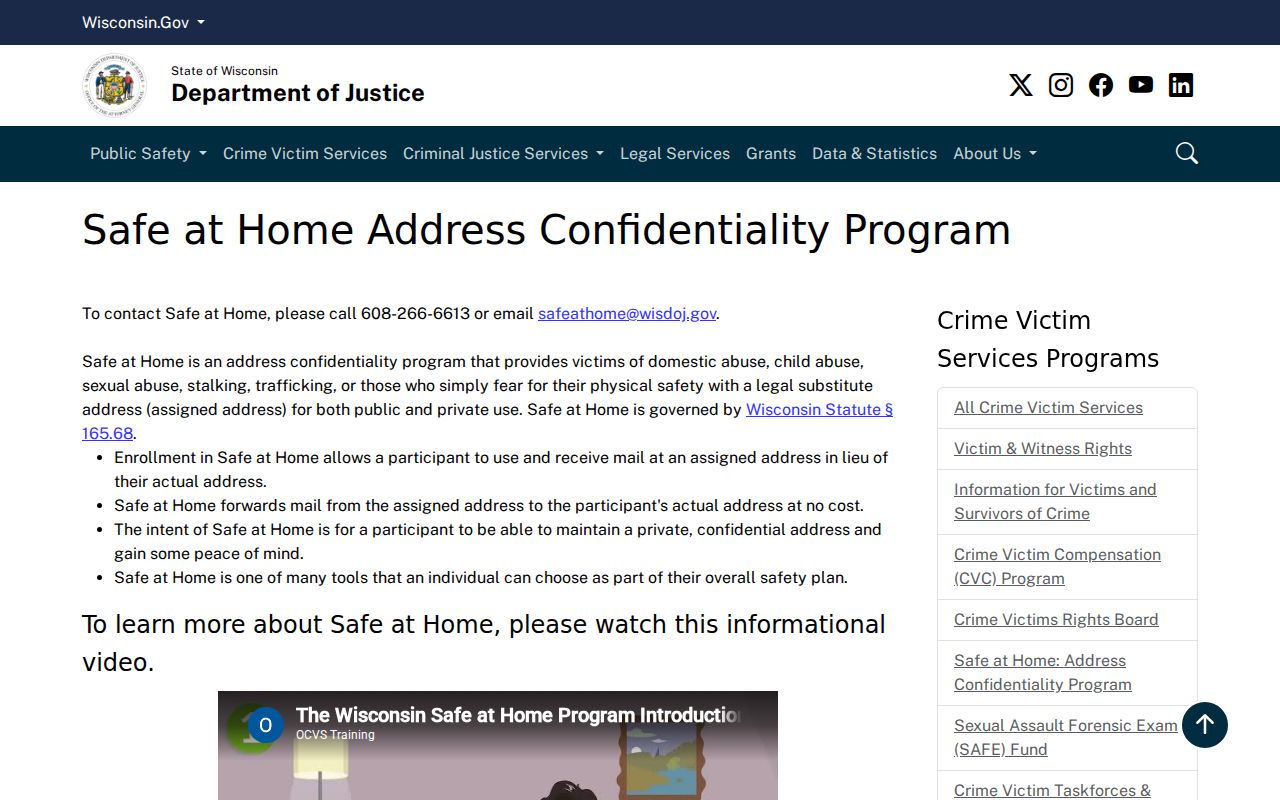
Note: The state program protects eligible participants and operates separately from the county parcel record.
Lawful use. Use a Lafayette County owner record for property questions and due diligence. Do not use an address or name to stalk, harass, threaten, or harm anyone; seek help from the custodian if a privacy concern applies.