
Finding Who Owns a Lafayette County Property
Figuring out who owns a Lafayette County property takes two county sources. Start with the site address and find the parcel in the tax system. The Owner(s) field names the person or entity on the assessment record. Then check the Register of Deeds index for the latest recorded grantee. The tax roll and the deed do different jobs. A fresh transfer may not hit the roll right away. Carry the parcel number and legal description from one search to the next. This keeps both tied to the same land. That habit helps most with trusts, estates, and business entities. Anyone can search Lafayette County property records by address this way.
- Search Ascent by the property’s site address or parcel number and open the matching result.
- Copy the parcel, Owner(s), mailing address, site address, and legal description.
- Search the Register of Deeds index for the latest deed using the grantee or legal description.
- Compare the deed’s land description with the tax parcel before treating the name as confirmed.
- If an entity appears, use state business records only for entity filing context; they may not identify LLC members.
The Lafayette County Owner Field on Ascent
Ascent labels the tax name "Owner(s)" in its result grid. The same grid shows Parcel, Site Address, Privacy Exp. Date, and Tax Years. The Real Property Lister maintains ownership and mailing addresses within the Lafayette County parcel record. So the field answers who sits on the tax roll. It does not say who occupies the building or who controls an entity.
County materials describe a link from the parcel result to assessment data and tax details. Sales history is included. Zoning appears where available, and so does assessor information. The card is client-rendered. Labels beyond the public grid may shift or need a live selection. Grab the parcel number and legal description before moving on to deed records. Open the Ascent parcel-result route for the documented card fields.
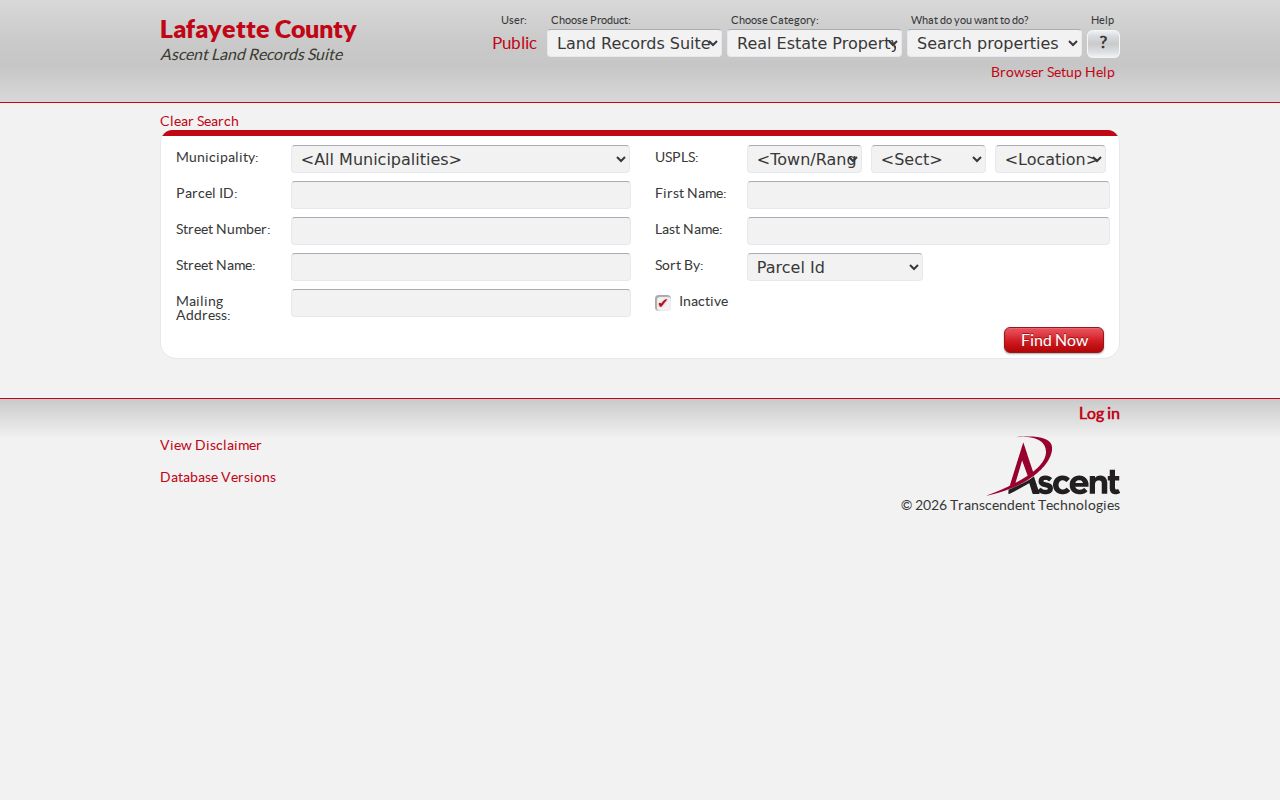
Treat the Owner(s) value as an index term. Then verify it against the recorded instrument for that same Lafayette County parcel.
Sources Naming a Lafayette County Property Owner
Owner information lives in several Lafayette County systems. Each one was built for a different purpose. The tax roll carries the name used for assessment and billing. A recorded deed shows the parties to a transfer. The GIS map ties parcel geometry to assessor data, and it can link back into Ascent. State entity records help decode a corporation name or registered agent. They never turn that agent into the owner of the land. Match each source to its job. The deed still settles the question.
| Source | Owner Info It Gives | Access |
|---|---|---|
| Ascent / tax roll | Owner(s), mailing and site addresses, parcel, tax years | Public county search |
| Register of Deeds | Grantor, grantee, date, and land description on filed deeds | Tapestry EON or office |
| County GIS | Parcel geometry and available linked attributes | Parcel Viewer or ArcGIS service |
| Wisconsin DFI | Entity name, registered agent, status, and filing history | Public corporation search |
The Owner(s) name can differ from an occupant or a mailing recipient. A business may own the Lafayette County parcel. Its registered agent may only receive legal notices. A personal representative may appear during estate administration. None of those labels alone proves who lives at the address. And a site address is never permission to contact or approach someone.
Tax Owner and Deed Grantee in Lafayette County
A deed records a transfer between named parties. The tax roll exists for assessment and billing. The Real Property Lister updates ownership and address information. County GIS materials describe parcel geometry as continuously refreshed after transfers. That mapping work has a limit. The tax owner name does not flip the instant a deed is recorded.
Lafayette County's own address-change form is clear. Only a recorded document can change ownership on tax bills. After a recent sale, compare sources. Check the latest grantee in Tapestry EON against the Owner(s) field in Ascent. If the names differ, do some checking. Look at the deed date, the legal description, and any estate or trust language. One source may simply lag the other.
Entity and Estate Names in Lafayette County
Owner names in the Lafayette County land index may be an LLC, a trust, a trustee, or an estate. A personal representative may appear too. Search the exact wording shown on the Ascent card or deed. In a probate chain, the Register in Probate file may show authority. It may also show an order tied to the later deed.
Wisconsin DFI's corporate search can reveal legal name, registration date, entity type, and registered agent and office. It also shows status and filing history. It does not expose FEINs, domestic LLC member names, sole proprietors, or DBAs. A result clarifies the entity. It is no substitute for the recorded land instrument. Use the Wisconsin DFI advanced search for public business-record fields. The DFI advanced-search screen shows the filing fields available when an owner name is an entity.
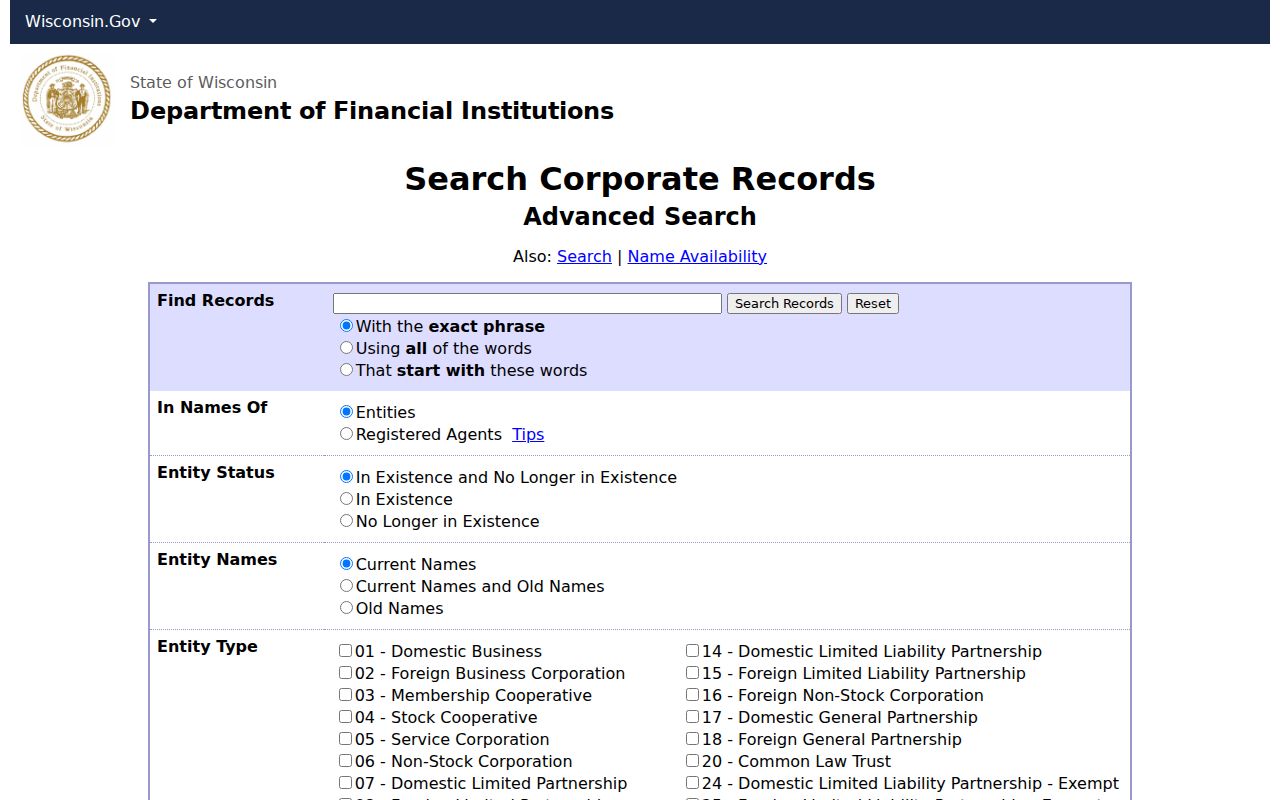
Use an entity filing to interpret the exact company name. Then return to the deed to confirm the Lafayette County land transfer itself.
Recent Lafayette County Transfers Need a Second Check
Lafayette County publishes no fixed window for how quickly the tax roll updates after closing. Ascent may still show a prior tax owner. The Register of Deeds may already hold the later instrument. Search the recorded chain by the current grantee. Confirm the same parcel description before calling any name current.
For present-tense details on the assessor's Owner(s) field, use the current Lafayette County owner-record route. The method holds steady. Parcel first, then deed confirmation.
Cuba City Ownership Requires a County Check
A Cuba City mailing address alone will not tell you which county holds the records. The incorporated city straddles the Lafayette and Grant county line. ZIP 53807 also reaches past the Lafayette side. Before choosing a Register of Deeds index, find the parcel on a GIS map. The polygon shows which county actually contains the land. That check settles what a postal address cannot. For a parcel in Lafayette County, property records are searchable through Ascent, county GIS, and Tapestry EON. For land on the Grant side, use Grant County's system even when the tax bill still says Cuba City. A city name is only a search clue. It is never a boundary finding.
Verify a Lafayette County Owner Name Across Records
Matching one parcel across records beats any single search. The strongest owner lookup checks three sources at once. Pull the Ascent tax parcel, the current deed, and the county GIS map for the same piece of land. Use the parcel number to find the polygon, then compare the newest deed's legal description against the assessment record. A street address that merely looks similar proves little. Split lots, old road names, and multi-parcel properties all create false matches in Lafayette County property records.
Sometimes the tax record and the deed show different names. Read the filed instrument first. The transfer may run to a trust, a company, an estate, or a personal representative. That wording explains many mismatches. If the entity's legal status matters, search its exact name in Wisconsin DFI. A listed agent is not the owner. The county also publishes no fixed interval for updating the tax owner field after a deed is recorded.
For a recent transfer, Tapestry EON searches the Register of Deeds index by party, legal description, document number, date range, and document type. The remote query costs $8.75 for up to 200 listings. Detailed index data opens after payment. Document images run $1 per page. Use those fields to pin down one recorded transfer. Then verify the image and parcel rather than assuming the first matching name is the current owner of record.
Plural names in the Ascent Owner(s) field may mean several named owners or a vesting description, never a list of residents. Copy the full name exactly as shown. Keep "trustee," "personal representative," or an entity suffix intact. Then match the deed's grantee and legal description to the same parcel. When the record points to an estate, the Register in Probate may hold related authority; a corporation points instead to Wisconsin DFI for the public entity filing. Neither source replaces the deed as the transfer record.
Limits of a Lafayette County Owner Lookup
An owner lookup returns the public-record name tied to a parcel. It is not proof of an occupant. It cannot reveal arrangements inside an LLC or trust. It does not certify clear title either. Wisconsin's Safe at Home program lets eligible participants use a substitute address with confidential-elector protections, and property ownership can complicate that privacy, so participants should check with the program before relying on any public record. When a participant's safety is involved, read the Wisconsin Safe at Home program information first. County deed records remain public throughout.
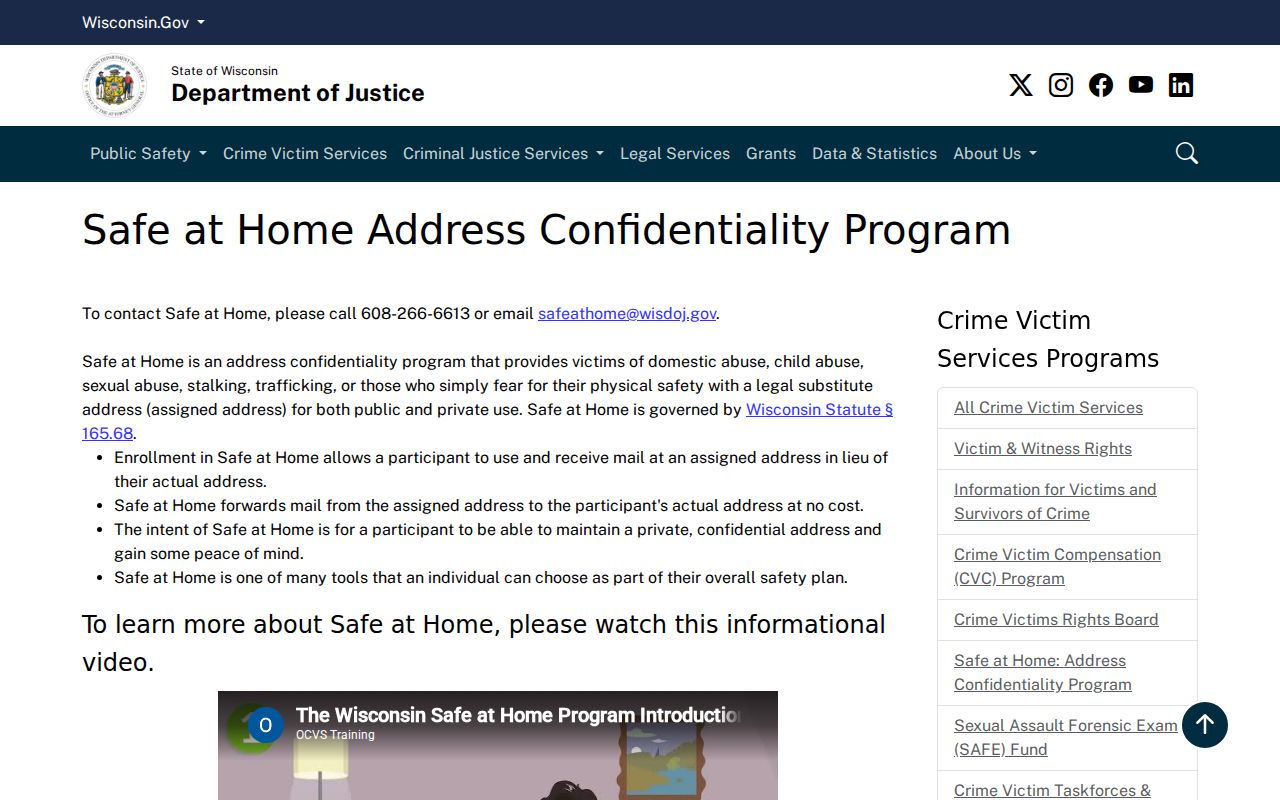
Its guidance covers eligibility, not the county deed index.
Lawful use. Use public records for ownership confirmation, purchase diligence, house history, or civic research. Do not use an owner name or address to stalk, threaten, harass, or harm a person. Ask the custodian to explain a record that has safety or privacy limits.