
What Lafayette County Property Tax Records Show
An Ascent parcel result for a chosen year shows the parcel, Owner(s), Site Address, Privacy Exp. Date, and Tax Years, and it opens assessment and tax detail. Linked county materials add sales history, zoning where available, and district information. The bill is separate. It shows an amount and a payment path. Value, tax charge, and payment status are three different figures.
| Field | What It Shows | Where |
|---|---|---|
| Assessed value | Assessment figure tied to the parcel and tax year | Ascent / municipal assessor |
| Estimated fair-market figure | Tax-bill value context defined by Wisconsin law | Tax bill / assessment detail |
| Tax years and detail | Years available and selected tax information | Ascent; choose tax detail |
| Payments and delinquency | Payment status, postponed amounts, and delinquent taxes | Municipal treasurer / county Treasurer |
| Lottery credit | Credit administration for an eligible property record | County Treasurer and tax bill |
Assessed value feeds the property-tax system. A bill's estimated fair-market figure is a statutory tax value. Neither number promises what a parcel would sell for. The Department of Revenue publishes municipal assessment-ratio and equalized-value reports. These reports help compare local assessment levels across places. Compare like years and property classes. A ratio describes a whole municipality rather than an individual appraisal of one house.
Ascent Search Fields for Lafayette County Tax Records
Ascent accepts an owner name, a site address, or a parcel number. Any of the three finds the record. Once you pick a result, the county Treasurer's FAQ says to choose the tax detail option for the bill. The tax-year selector keeps comparisons aligned. So do the years displayed with the parcel. These fields locate a record; they do not settle a deed or boundary question.
| Field or action | What it returns | Access point |
|---|---|---|
| Name, address, or parcel | Matching tax parcel | Ascent public search |
| Select detail | Tax information for the chosen parcel | Open after a result |
| Tax year | Year-specific bill or detail | Result card / selector |
| Print Results | Current search result output | Result grid action |
See the county’s tax lookup and payment FAQ for the current route.
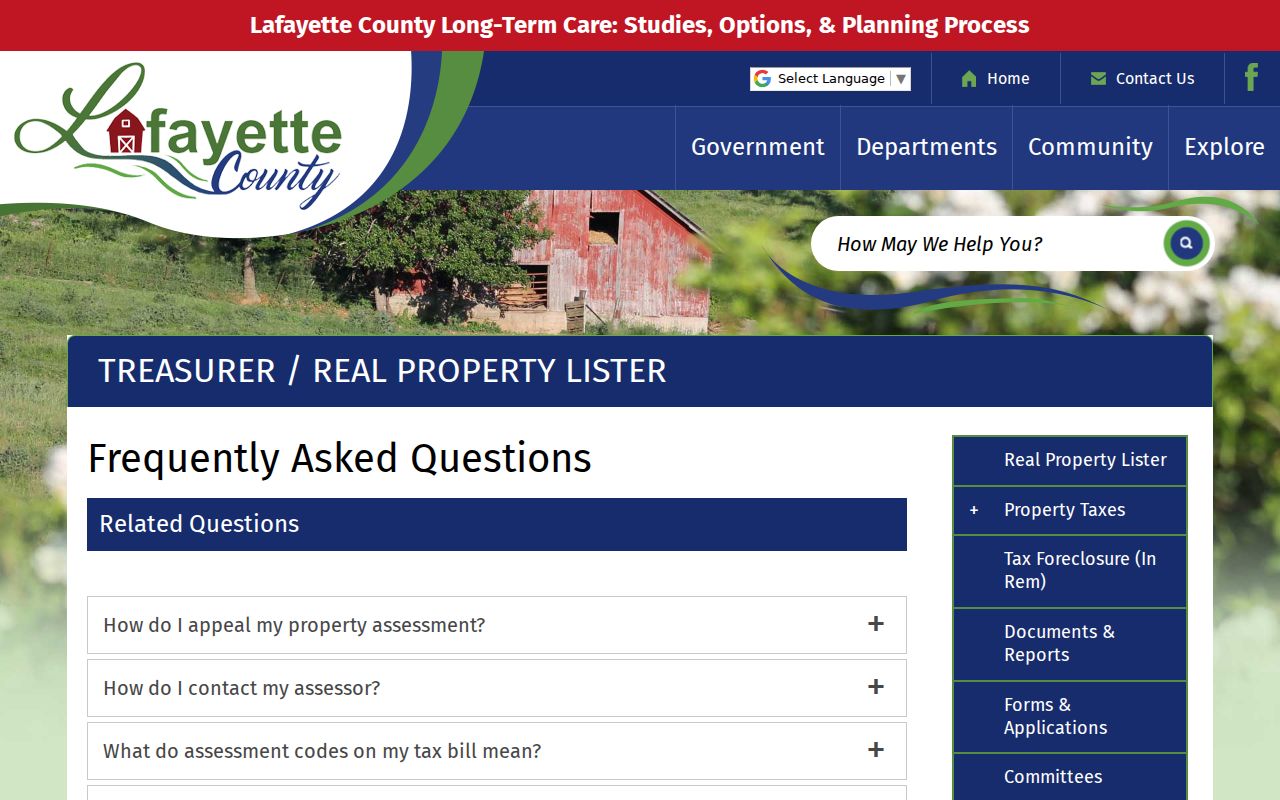
The FAQ connects the Ascent search with the correct bill-detail view for a parcel.
Lafayette County Bills Use Two Payment Routes
The county Treasurer prepares bills and annual tax rolls for 28 municipalities. But the two installments go to different custodians. Read the bill first. Pay the first half to the local municipal treasurer by January 31. The second or postponed half goes to the county Treasurer. That window runs from February 1 through July 31. Check the municipality before sending money to either office.
Online convenience fees differ by method. The county lists 2.3 percent for credit card, $3.95 for debit, and $1.50 for e-check. A delinquent-tax payer should call the Treasurer first. Paying online is not always the right route for those accounts. The office also tracks postponed and delinquent taxes, lottery credits, and in-rem foreclosure work.
Lafayette County Assessment Downloads by Year
The county GIS download directory lists annual tax-assessment files for 2021 through 2025, plus a 2024 geodatabase, orthophotos, contours, and historic road plats. These files suit broad research. They also show how a parcel appeared in a given year. A download is not a certified bill, and it does not replace current Ascent parcel detail.
The county's GIS download directory page lists these products and shows no subscription charge. Large files can take time to open. Label every dataset by its year. Do not treat a dated file as current.
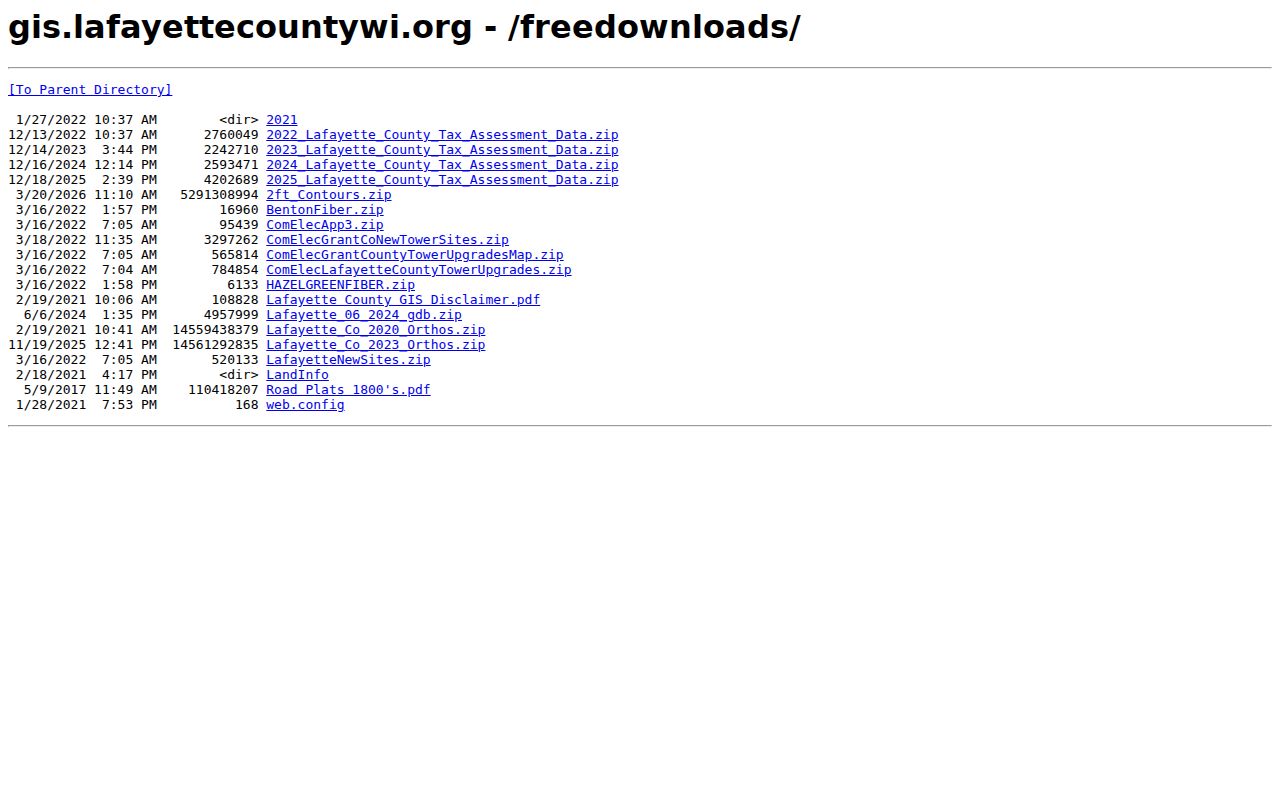
Match the file to your assessment year. Retain the original file name so the data date stays clear whenever the numbers resurface in a later comparison.
Assessed Value and Equalized Value in Lafayette County
Municipal assessors supply the assessment data that flows into county systems. The Department of Revenue ratio reports add municipal context. Those reports include assessment ratios and equalized values. A ratio shows how local assessed values compare with estimated market levels. It covers a whole municipality. It is not a parcel-level appraisal. Never price one house from it. For a single parcel, start with the value field and year shown in Ascent, then read the assessment notice or ask the municipal assessor about the method and any change. Municipalities revalue on their own schedules, so Lafayette County parcels do not all change value in the same year.
Finding a Lafayette County Tax Bill
Find a bill through Ascent by address, owner name, or parcel number. Choose the tax detail option. Confirm the year. A delinquent or postponed amount needs the Treasurer. Contact that office before relying on a general online payment screen. For the first installment, the county's instructions name the local municipal treasurer as the payee.
- Search Ascent with the address, owner name, or parcel number.
- Open the matching parcel and choose tax detail.
- Confirm the year, municipality, payment status, and any listed lottery credit.
- Call the Treasurer about delinquent amounts or unclear payment routing.
- Assessed value
- The value assigned for the local property-tax roll.
- Equalized value
- A Wisconsin DOR measure used to compare municipal assessment levels.
- Lottery credit
- A credit the Treasurer administers and the bill may reflect.
- Delinquent tax
- A tax amount that remains unpaid under the county’s collection records.
Reviewing a Lafayette County Assessment
An owner who questions an assessed value should compare the parcel detail, its assessment year, and the municipal notice. Lafayette County's published material points to local assessment notices and Board of Review records. It gives no countywide appeal date. Nor is there one procedure for every municipality. Contact the local assessor or clerk promptly. The notice carries the correct meeting and filing rules.
Check the local notice. No single Lafayette County deadline was verified for every municipality. Ask the municipal assessor or clerk for the current Board of Review date, filing steps, and evidence rules before a meeting is set.
Lafayette County Delinquent Tax Records
Delinquent Lafayette County taxes land with the Treasurer. That office keeps the delinquent real-estate tax records and coordinates in-rem foreclosure once a parcel owes three or more years of back taxes. Ascent can pull the parcel and its tax detail. The Treasurer can then explain the balance, the payment path, and any related county file. One tax entry is not the whole story. Later court filings or deed records may exist beyond it. When a legal notice or a disputed payment is in play, check the Treasurer record and the court docket as two separate sources. Wisconsin Circuit Court Access shows public case information online. The Clerk of Circuit Court provides certified copies. Never treat an online tax flag as a full title report. The Wisconsin Circuit Court and appellate case search covers public case details whenever a tax dispute has also reached a courtroom.

Online case information is a lead, not the file. Request the official docket from the Clerk of Circuit Court. The Wisconsin court system also explains public access to court case information, including public terminals at the courthouse.

Contact the Lafayette County Clerk of Circuit Court.
Reading a Lafayette County Tax Year and Payment Entry
Line up four things before comparing tax records. Keep the parcel number, the municipality, the bill year, and the payment status side by side. A street address can point to the right parcel. The municipality and district code decide which local tax units show up on the bill. Cuba City, for example, appears in county material as tax district 211. Mailing cities can straddle a county line. Confirm the parcel sits within Lafayette County first. Assessed, billed, and due are three different figures. Assessment is a value placed on the tax roll. The bill applies the levy and any credits to that roll. Lafayette County administers lottery credits. Never assume one year's credit carries to the next bill. Check the exact year and status before computing a balance. Compare one property against a neighbor only with care. It works only when both figures come from the same tax year. Payment channels add charges separate from the property tax itself. The county lists 2.3 percent for credit cards, $3.95 for debit, and $1.50 for e-check. Confirm those fees on the current Treasurer page before paying. Check the named payee too. The first and second installments go to different offices. For a delinquent bill or a postponed payment, call the Treasurer. Do not rely on an online receipt screen as a full account history. County files carry a data vintage. The vintage runs from 2021 through 2025 in the annual releases. Record the year in the file name. Compare like years rather than matching a historical roll against a current Ascent result. A broad public assessment download helps. The individual account and payment record still governs one parcel.
Tax Credits and Lafayette County Delinquency Questions
Lottery credits and delinquent balances both sit with the Lafayette County Treasurer. Read the credit entry for the specific year. Never assume a prior credit carries forward. If a credit seems missing, ask the Treasurer which application or eligibility rule applies to that bill. Not every parcel qualifies. A delinquent entry calls for a direct account check. Lafayette County coordinates in-rem foreclosure for land with at least three years of unpaid property taxes. That process reaches beyond one Ascent line. Confirm the amount and status with the Treasurer. When a legal notice is involved, follow the court side through Wisconsin Circuit Court Access or the Clerk of Circuit Court. For a simple current bill, have the parcel number and tax year ready when you call the local municipal treasurer or the county office. Ask whether the payment posted. Ask whether an installment was postponed. Ask which fees apply to your payment method. An online receipt can confirm a submitted transaction while the official account takes time to reflect it.